Gutter and Downspout Drainage Assessment: How Water-Flow Problems Are Diagnosed
Gutter and downspout drainage assessment is a structured inspection of runoff, gutter flow, downspout capacity, and discharge conditions; AGM Gutters uses the findings to identify the cause of water-flow problems and recommend gutter repair, downspout repair, or downspout installation.
3 years of local experience
Get a Free EstimateWhat Does a Gutter Drainage Assessment Check?
A gutter drainage assessment checks how roof runoff enters the gutters, moves through the system, exits the downspouts, and disperses away from the building.
Our team follows the full water path from the roof edge to the discharge area. This approach helps us separate the visible symptom, such as gutter overflow, from the part that causes the problem.
We check the gutter system, gutter alignment, gutter pitch, gutter seams, end caps, hangers, and gutter outlets. We also inspect each downspout, its connection, and the condition of the ground near the discharge point.
What Information Is Recorded Before the Assessment?
The assessment records the roof drainage layout, visible defects, discharge paths, and site conditions that may affect water movement.
We use these details to connect roof runoff with the parts that carry rainwater away from the building. The record also helps us explain whether the issue involves a gutter section, a downspout, or the final drainage outlet.
| Information recorded | Why it matters |
|---|---|
| Roofline and gutter sections | Shows where roof runoff enters and how the gutter system is arranged. |
| Downspout locations | Shows how water leaves each gutter section. |
| Splash blocks and extensions | Shows whether water is directed away from the building. |
| Drainage outlet and discharge path | Shows where water ends up after leaving the downspout. |
| Site conditions | Records pooling, erosion, soil movement, and other conditions that affect drainage. |
How We Diagnose Gutter and Downspout Water-Flow Problems
AGM Gutters diagnoses drainage problems by tracing the water path from the roof edge through the gutter and downspout to the discharge area.
Each step helps us identify the primary cause before we recommend work. We also note related problems, such as leakage, overflow, or erosion.
How Do the Findings Determine the Recommended Gutter Work?
The recommended gutter work depends on whether the failure begins with gutter alignment, gutter condition, downspout movement, or the final discharge path.
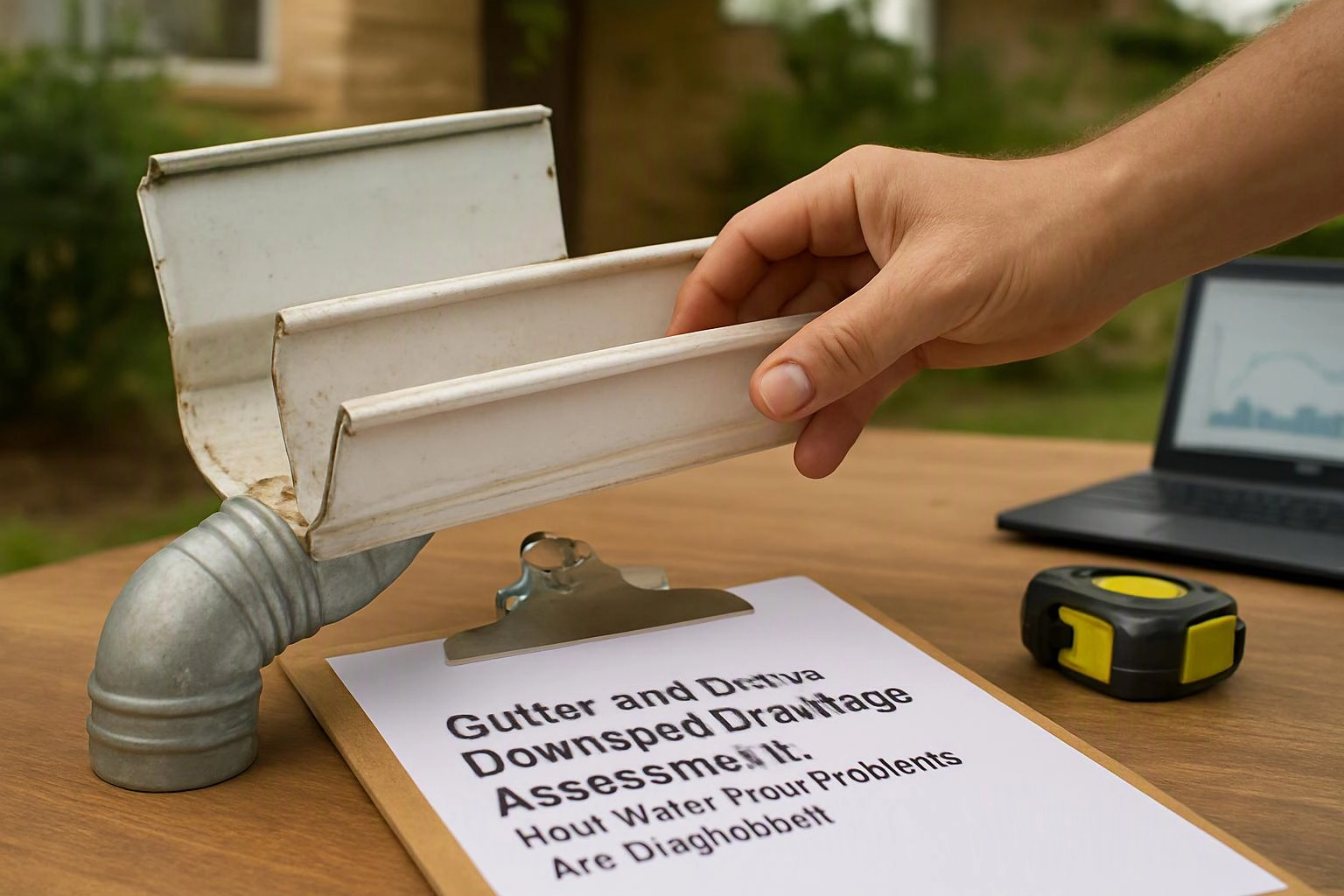
Gutter repair may address a poor gutter slope, loose hanger, open gutter seam, damaged end cap, or blocked gutter outlet. Downspout repair may address a loose downspout connection, damaged elbow, blockage, or poor downspout extension.
Downspout installation may be recommended when the roof drainage layout does not move water away from the building well. We also check for water pooling, soil erosion, fascia damage, and signs of foundation drainage problems.
Our estimate explains the affected components and the work needed to improve water flow. Free Estimates Available.
What Should You Prepare Before the Assessment?
You can prepare for the assessment by documenting where water collects and ensuring AGM Gutters can safely access the relevant drainage areas.
Homeowner observations can help us connect a rain event with a specific gutter section or downspout. Clear access also lets our crew inspect the system without moving personal items during the visit.
What Does the Assessment Report Explain?
The assessment report explains the observed drainage cause, the affected components, the recommended work, and what the proposed estimate covers.
Our team describes the water-flow route from the roof edge to the discharge point. We also explain whether the recommended work involves repair, replacement, or a change to the discharge path.
The estimate scope connects each recommendation to the inspection findings. This helps you understand why a gutter repair, downspout repair, or downspout installation may be needed.
When Should You Request a Gutter Drainage Assessment?
You should request a gutter drainage assessment when water repeatedly overflows, leaks, pools near the building, or causes visible damage.
Common warning signs include a downspout leak, landscape erosion, fascia damage, standing water, or recurring water near the foundation. These symptoms can come from different parts of the roof drainage system.
We trace the full route so the recommended work addresses the cause. Contact AGM Gutters to arrange an assessment and request an estimate for the needed gutter work.
Questions About Gutter Drainage Assessments
Can a gutter drainage assessment identify whether the gutter or downspout is causing the overflow?
Yes, a gutter drainage assessment can identify whether the gutter or downspout is causing the overflow. AGM Gutters traces water from the roof edge through the gutter, outlet, downspout connection, and discharge area to locate the source.
What should I do if water pools near the downspout after an assessment?
Water pooling near the downspout means the discharge path may not move water far enough away from the building. Keep the area clear and follow the recommended correction for the extension, splash block, outlet, or surrounding drainage condition.
Can an assessment show whether a downspout needs repair or replacement?
Yes, an assessment can show whether a downspout needs repair or replacement. The recommendation depends on the condition of the downspout, its connections, the water-flow route, and the available discharge path.
What does a gutter drainage estimate include after the inspection?
A gutter drainage estimate includes the affected components, the observed drainage cause, the recommended work, and the scope needed to improve the water-flow route. The estimate may cover gutter repair, downspout repair, or downspout installation when those services match the findings.