Gutter Installation Mistakes That Cause Leaks and Poor Drainage
Gutter installation mistakes that cause leaks and poor drainage include incorrect slope, loose fasteners, poor sealing, undersized components, and badly placed downspouts; AGM Gutters checks these details during gutter, seamless gutter, and downspout installation.
3 years of local experience
Get a Free EstimateWhy Gutter Installation Mistakes Cause Leaks and Poor Drainage
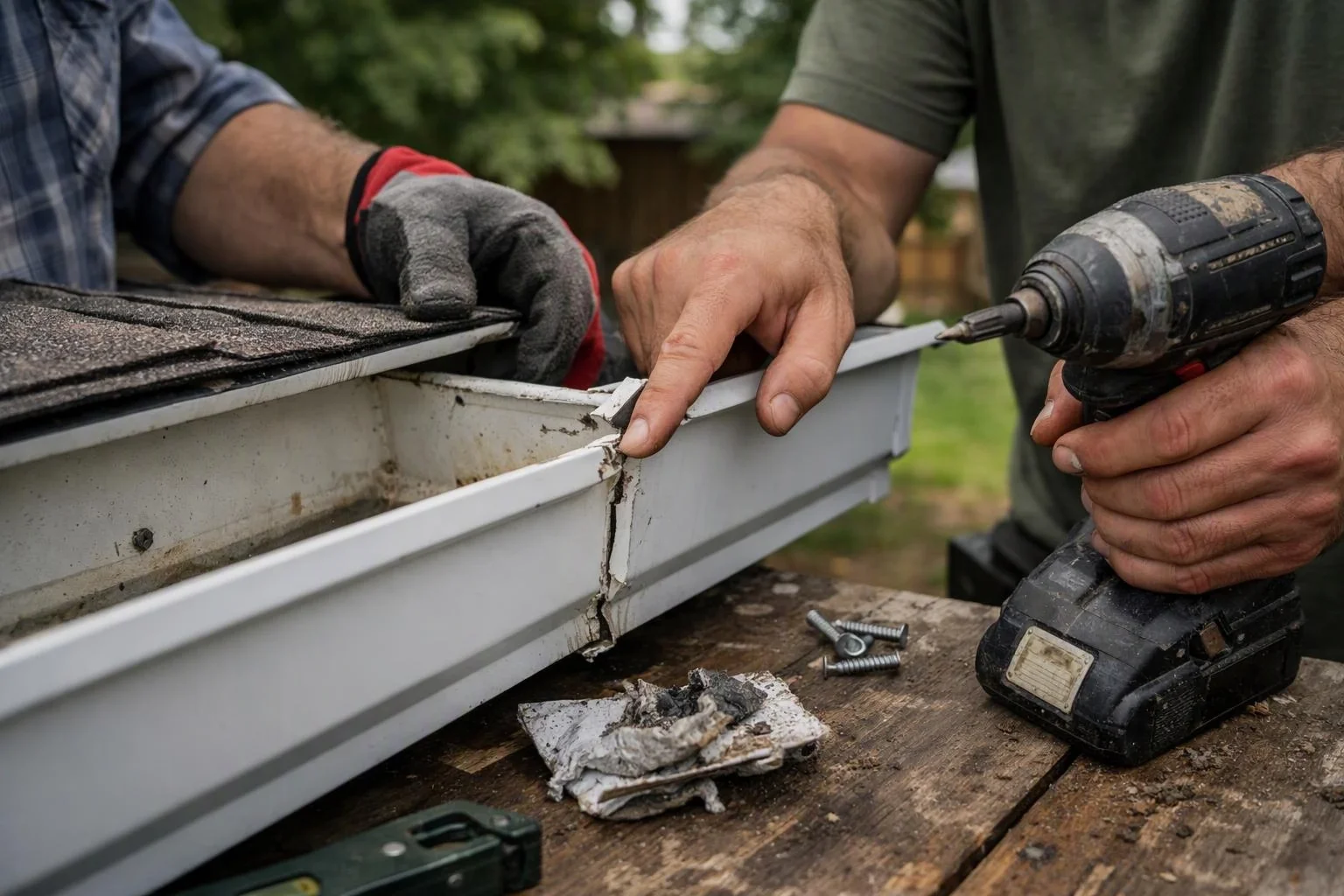
Gutter installation mistakes change how roof runoff moves through the drainage system. When water cannot follow the planned path, rainwater may sit in the gutter, spill over the edge, or reach the fascia and foundation.
We inspect the roof edge, gutter alignment, connections, and discharge points before we complete the work. Our team uses these checks to reduce gutter leaks and poor drainage.
Installing Gutters Without the Correct Slope
Gutter slope directs water toward the downspouts, so an incorrect slope can create standing water and gutter overflow. This mistake often happens when a long gutter run is mounted without checking its fall from end to end.
Standing water adds strain to the gutter and can expose joints to longer periods of moisture. We set the gutter slope during installation and check the flow before finishing the work.
Using Too Few or Loose Gutter Fasteners
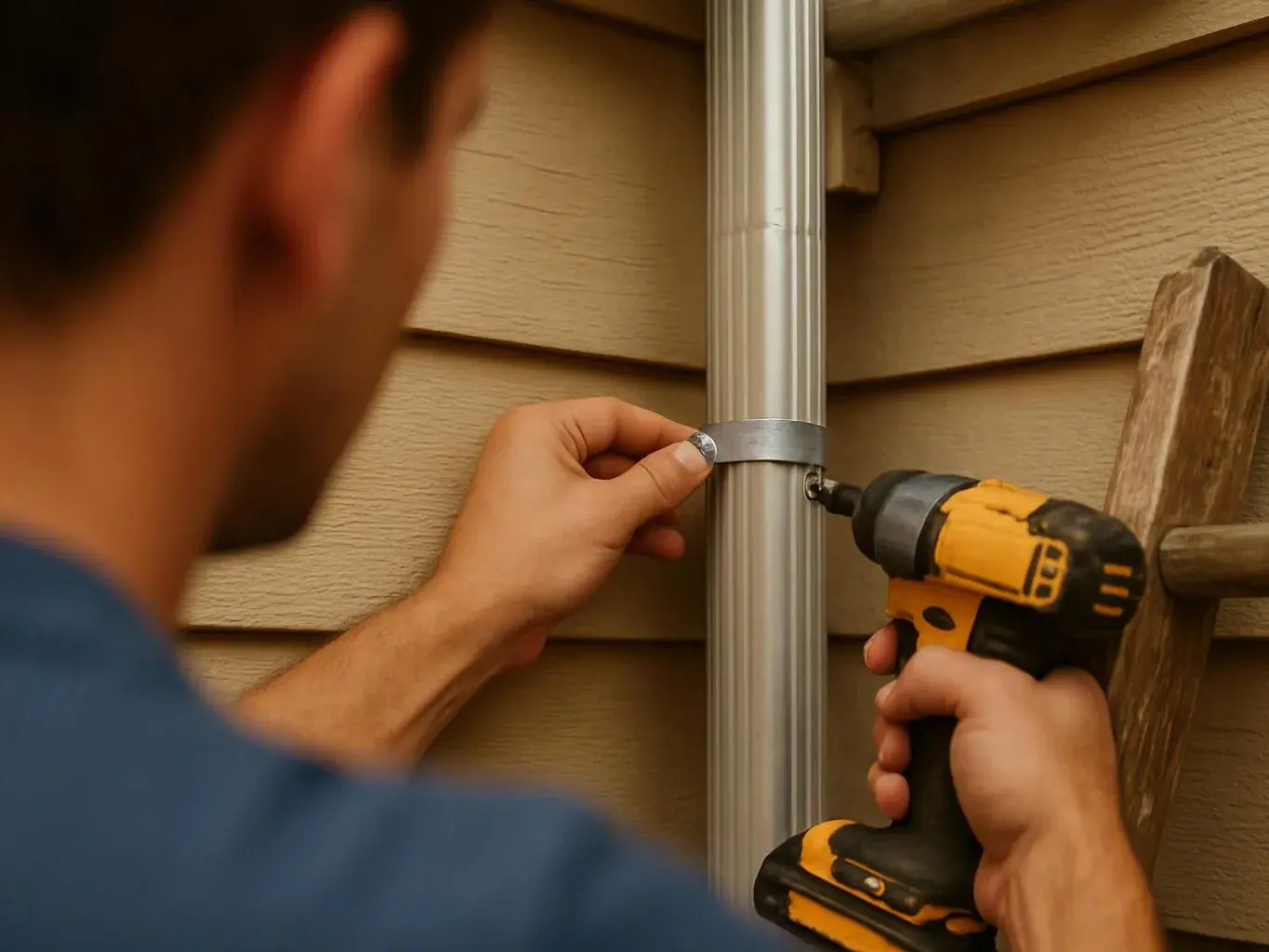
Gutter fasteners support the gutter against the fascia board and roof runoff. Loose or poorly placed gutter hangers can lead to sagging gutters, gutter separation, and leaks along the roof edge.
Fastener problems can require new attachment points and may also expose damaged fascia. We place and secure the hangers so the gutter stays aligned with the fascia.
Leaving Gutter Seams Poorly Sealed
Gutter seams are connection points where sectional gutters meet, and weak seals can cause seam leaks. Poor cleaning, movement, or the wrong gutter sealant can leave small openings that grow with repeated water flow.
Seam repairs may involve removing failed sealant and preparing the joint again. We inspect each seam and apply suitable gutter sealant during sectional gutter work.
Choosing Gutters That Cannot Handle the Roof Runoff
Gutter size must match the roof area and the amount of rainwater the system receives. Undersized gutters have limited gutter capacity, so heavy roof runoff can cause overflow even when the slope is correct.
Changing the gutter size may require new hangers, outlets, elbows, and downspouts. We review the roof area, drainage path, and rainfall intensity before choosing the system.
Installing Downspouts in the Wrong Locations
Downspout placement controls where water leaves the gutter sections and reaches the ground. Poor placement can leave long gutter runs overloaded or send water toward walkways, low areas, or walls.
Moving a downspout can involve new outlets, elbows, and changes to the rainwater discharge path. We route downspouts from roof valleys and gutter sections toward safe discharge areas.
Ending Downspouts Too Close to the Foundation
Downspout extensions move water away from the foundation and help limit soil erosion. Short discharge points can send water back toward the building, which may contribute to basement moisture and foundation drainage problems.
Correction work may require longer extensions, a changed outlet path, or repairs to soil that has washed away. We review the ground slope and connect the discharge to a safer drainage route.
Installing Gutters With Poor Roof and Drip Edge Alignment
Drip edge alignment helps guide water from the roof edge into the gutter. Poor gutter alignment can let water run behind gutters, wet the fascia board, and stain or damage nearby surfaces.
Fixing this problem may require adjusting the gutter position or correcting the roof edge detail. We align the gutter with the drip edge and check that water enters the trough cleanly.
Ignoring Fascia Damage Before Gutter Installation
Fascia damage weakens the surface that holds the gutter attachment. Wood rot can cause fasteners to pull out, leaving the gutter loose even when the gutter itself is in good condition.
New gutters attached to rotten wood may need to be removed for proper correction. We inspect the fascia board and address the attachment surface before completing gutter installation.
Failing to Test Gutter and Downspout Drainage
Water testing shows whether gutters drain correctly after installation. Without a water-flow test, a hidden downspout blockage, poor connection, or small leak may remain unnoticed.
Untested drainage can turn a simple correction into wider water damage. We complete a gutter inspection, test the flow, and look for leak detection points at seams, outlets, elbows, and end caps.
How We Prevent Gutter Installation Problems
Our installation process checks the parts that control water flow before the system is put into service. Each step helps us find drainage installation errors early.
We also explain the planned drainage path so you can understand how the finished system protects the roof edge and foundation.
When to Call Us for Gutter Installation Help
Some gutter checks are easy to see from the ground, but ladder work and roofline access can create safety risks. Call us when the problem involves attachment, roof edges, or drainage that you cannot safely reach.
Our crew can inspect the system and explain whether gutter repair, seamless gutter installation, or gutter replacement fits the condition.
What Changes the Cost of Correcting Gutter Installation Mistakes?
The cost of correcting gutter installation mistakes depends on the damaged components, roofline layout, access conditions, gutter material, and whether repair or replacement is needed; AGM Gutters can provide a free estimate after reviewing the work.
Gutter repair may focus on a seam, fastener, outlet, or short section. Gutter replacement, seamless gutters, downspout installation, or fascia repair can involve more preparation when the roofline is complex or access is difficult.
We review the existing installation, explain the needed correction, and provide an estimate based on the actual work. The estimate covers the parts and installation steps needed for the planned gutter solution.
How to Request an Estimate for Gutter Installation or Correction
A gutter installation estimate starts with a project assessment of the roofline, existing gutters, downspout paths, fascia, and drainage concerns. AGM Gutters can review whether the project needs Gutter Installation, seamless gutter installation, downspout installation, or correction work.
Share the locations of leaks, overflow, standing water, or foundation moisture when you contact us. We will use those details with our inspection to plan the work and provide a free estimate.
Request a gutter installation estimate
AGM Gutters is ready to review your drainage concerns and help correct installation mistakes before they cause more water damage.
Questions About Gutter Installation Mistakes
Can incorrect gutter slope cause water to pool?
Yes, incorrect gutter slope can cause water to pool when the gutter does not guide water toward an outlet. AGM Gutters checks the slope and completes water-flow testing to confirm proper drainage.
Why do new gutters leak at the seams?
New gutters can leak at the seams when the joint is dirty, poorly aligned, or sealed with unsuitable gutter sealant. We inspect the joint preparation and seal each connection as part of the installation.
What causes gutters to pull away from the fascia?
Gutters can pull away from the fascia when fasteners are loose, the fascia is damaged, or the gutter carries standing water. We inspect the attachment surface and correct the support before securing the gutter.
Can the wrong downspout placement cause foundation drainage problems?
Yes, wrong downspout placement can send roof runoff toward the foundation and increase soil erosion or basement moisture. We review the discharge path and use downspout extensions when the drainage layout requires them.
Should damaged fascia be repaired before new gutters are installed?
Yes, damaged fascia should be repaired before new gutters are installed when the damage affects gutter attachment. We inspect the fascia board and plan the installation around a sound support surface.
How can homeowners tell whether a gutter installation has poor drainage?
Homeowners can look for standing water, gutter overflow, sagging sections, water behind gutters, and discharge near the foundation. We confirm the cause with a gutter inspection and water-flow test.