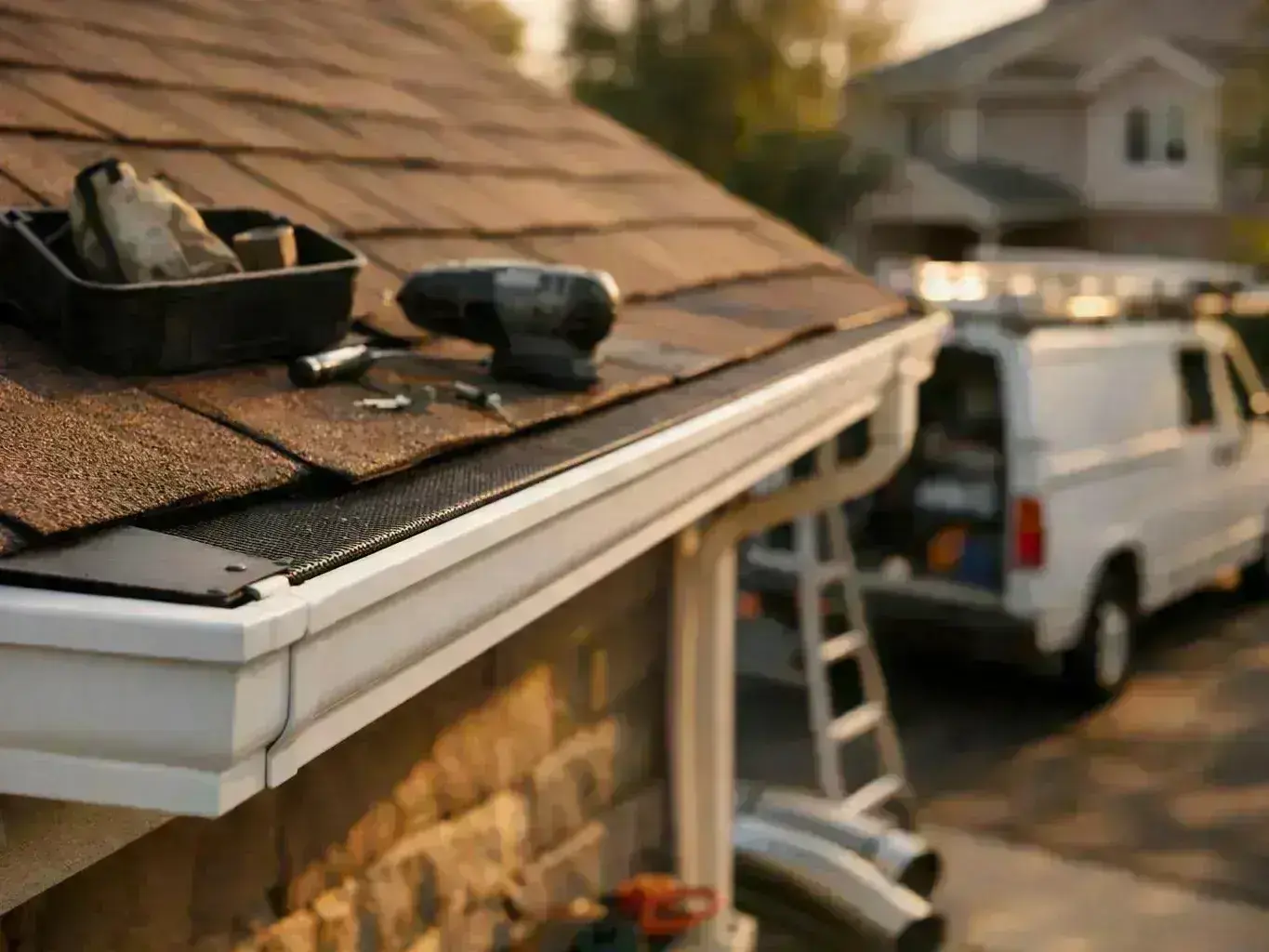
Gutter Sizing, Slope, and Drainage: What Goes Into the Design
Gutter systems are sized for roof runoff and sloped toward downspouts that carry water away. At AGM Gutters, we consider roof area, roof shape, rainfall, and drainage paths together. Free Estimates Available.
Get a Free EstimateHow are gutters sized for a roof?
Gutter size depends on how much rain the roof sends to each gutter. We consider roof area, roof slope, rainfall, and the path water takes. Our Seamless Gutter Installation brings these choices together.
The roof drainage area is the part of the roof that sends water to a gutter. A larger area can send more water to that gutter. We also check the roof's pitch and shape, since steep sections and roof valleys can direct more water to certain spots.
Gutter capacity is how much water a gutter can carry. We consider rainfall intensity and compare options such as the 5-inch K-style profile and the larger 6-inch K-style profile. K-style gutters have a flat back and a shaped front.
How does gutter slope help water drain?
Gutter slope guides water toward the downspout outlet. We plan the slope around the gutter run and outlet location.
The right slope depends on the run and its drainage path. We check that water can flow toward the outlet without leaving excess standing water. A sag or a blockage can also hold water, so we look for those problems when we assess the gutter.
How are downspouts matched to gutters?
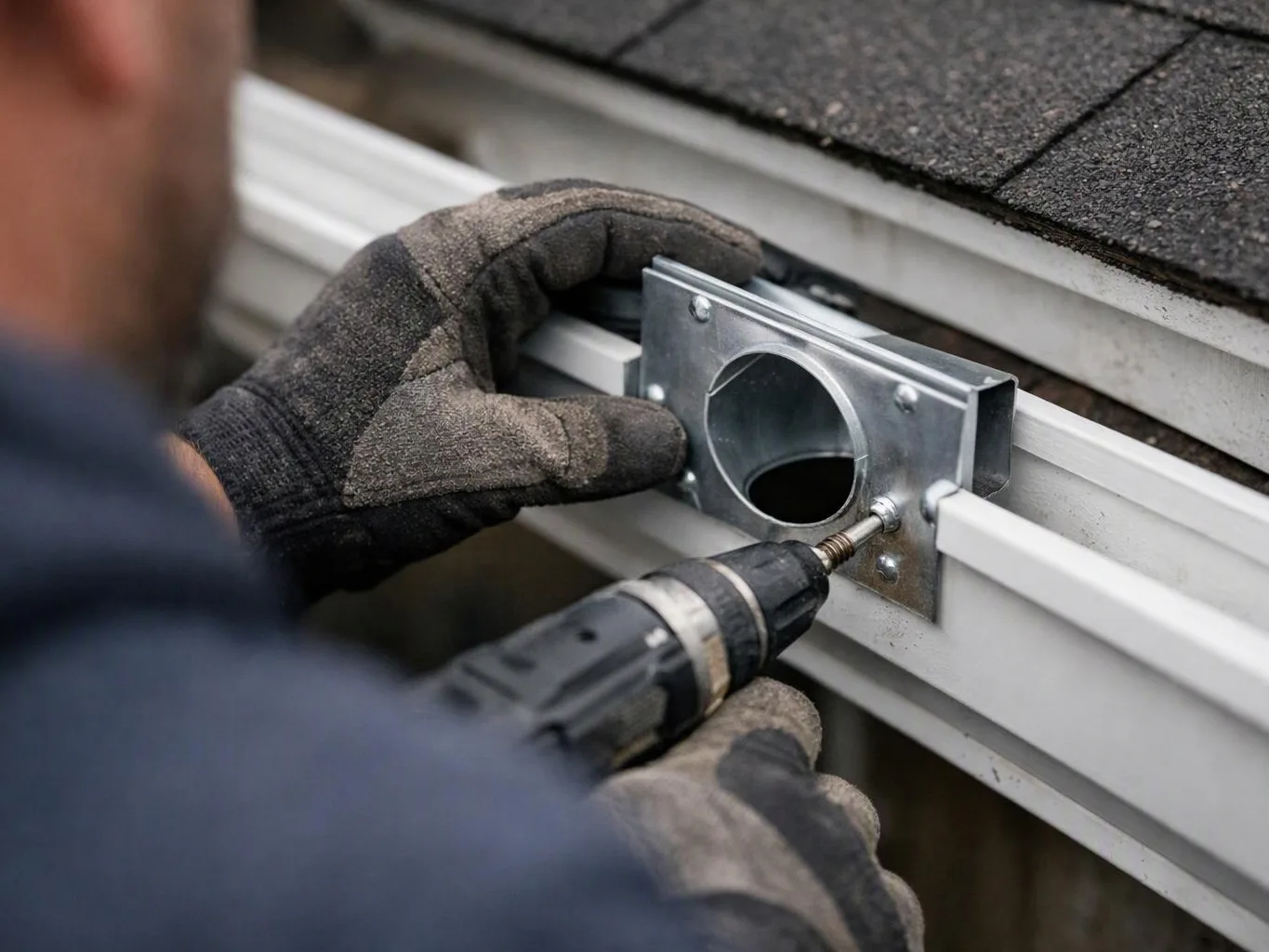
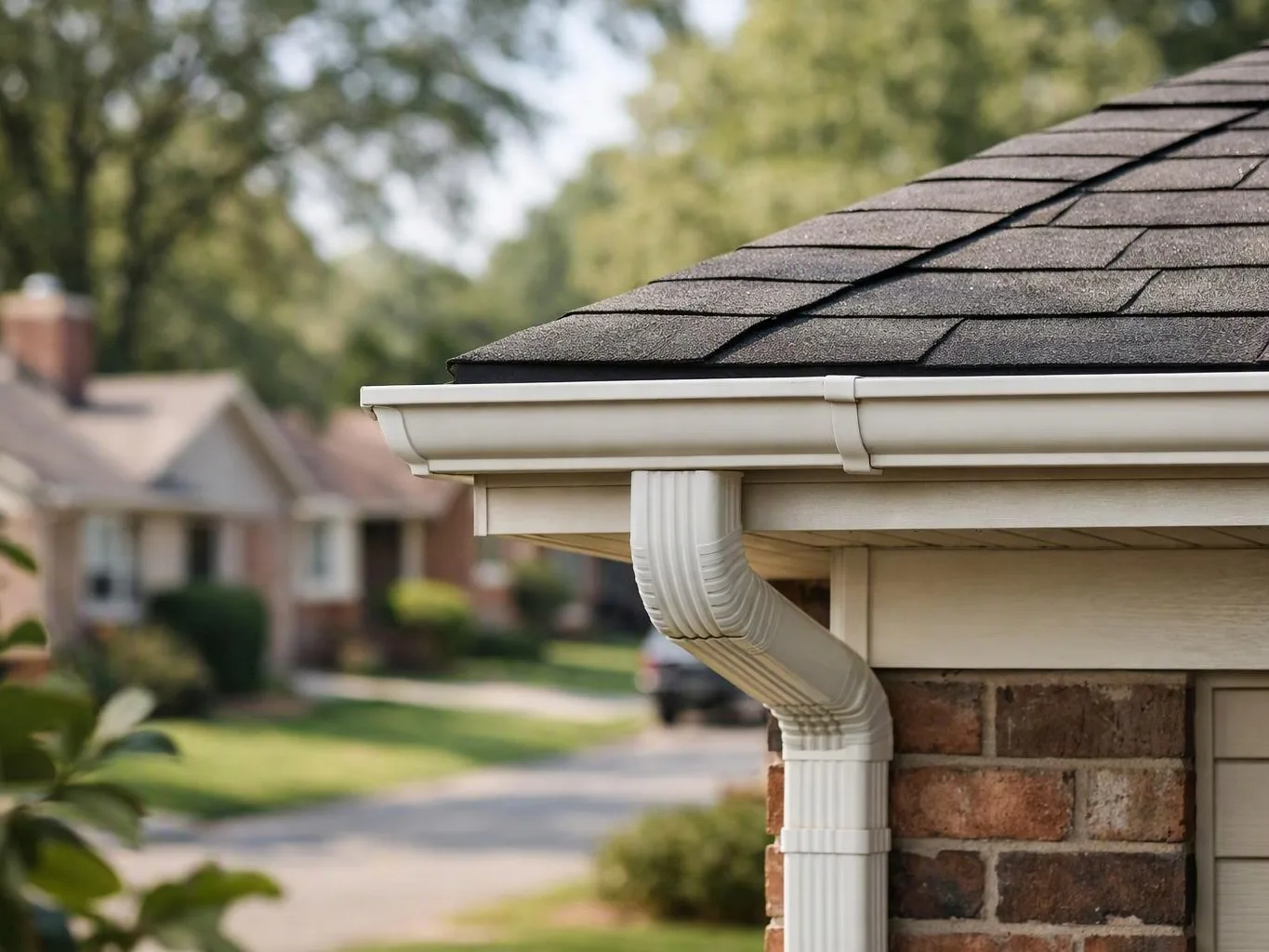
Downspouts must carry the water collected by the gutters. We consider downspout size, outlet placement, and where water can drain away.
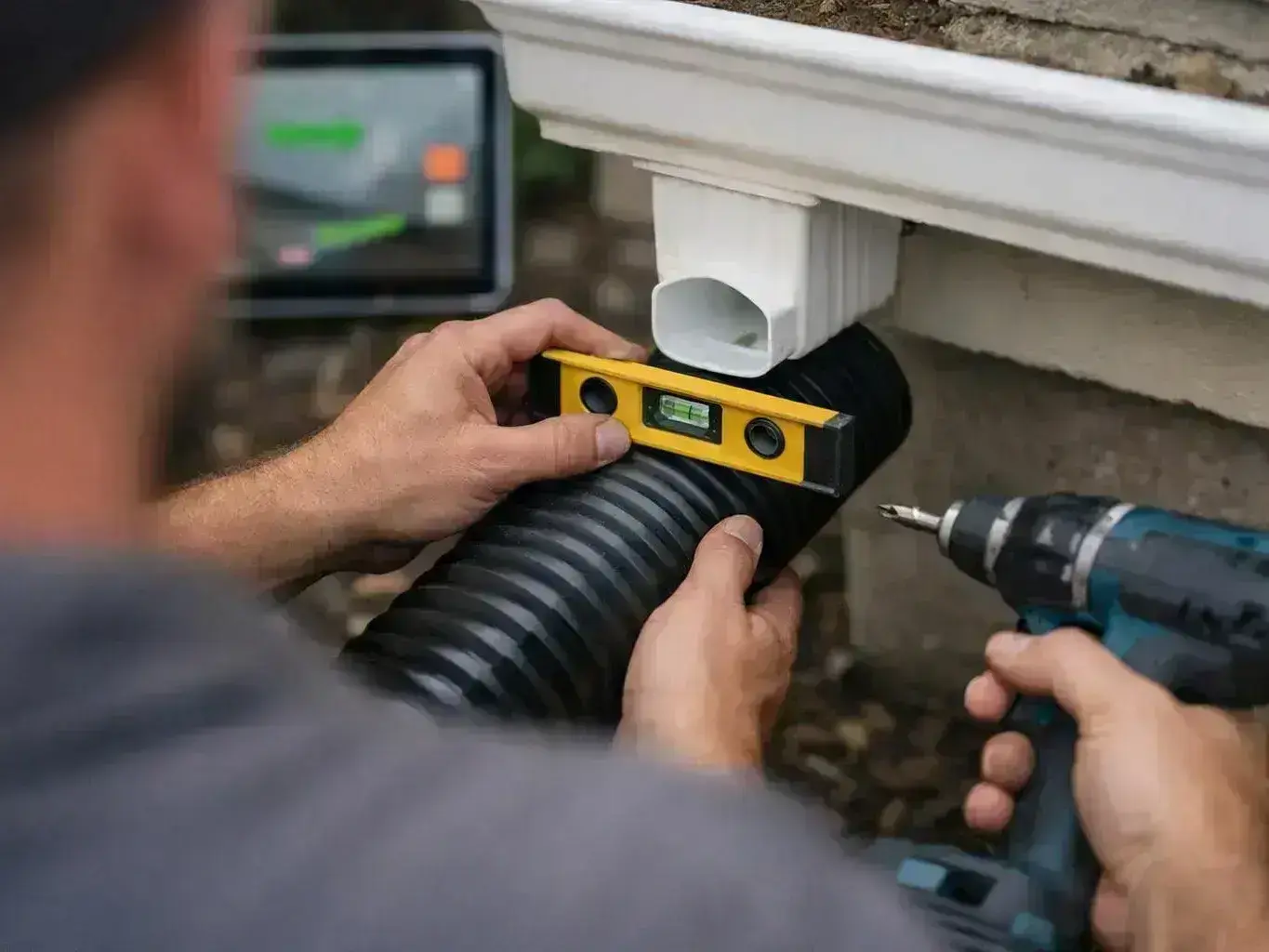
Downspout capacity needs to suit the water reaching each outlet. We consider options such as a 2x3 downspout or a larger 3x4 downspout. For Downspout Installation, we also look for a safe path that directs water away from the foundation.
Why gutter design choices work together
Gutter drainage works best when each part can handle the water flowing through it. We match the gutter, outlet, and downspout to the roof runoff.
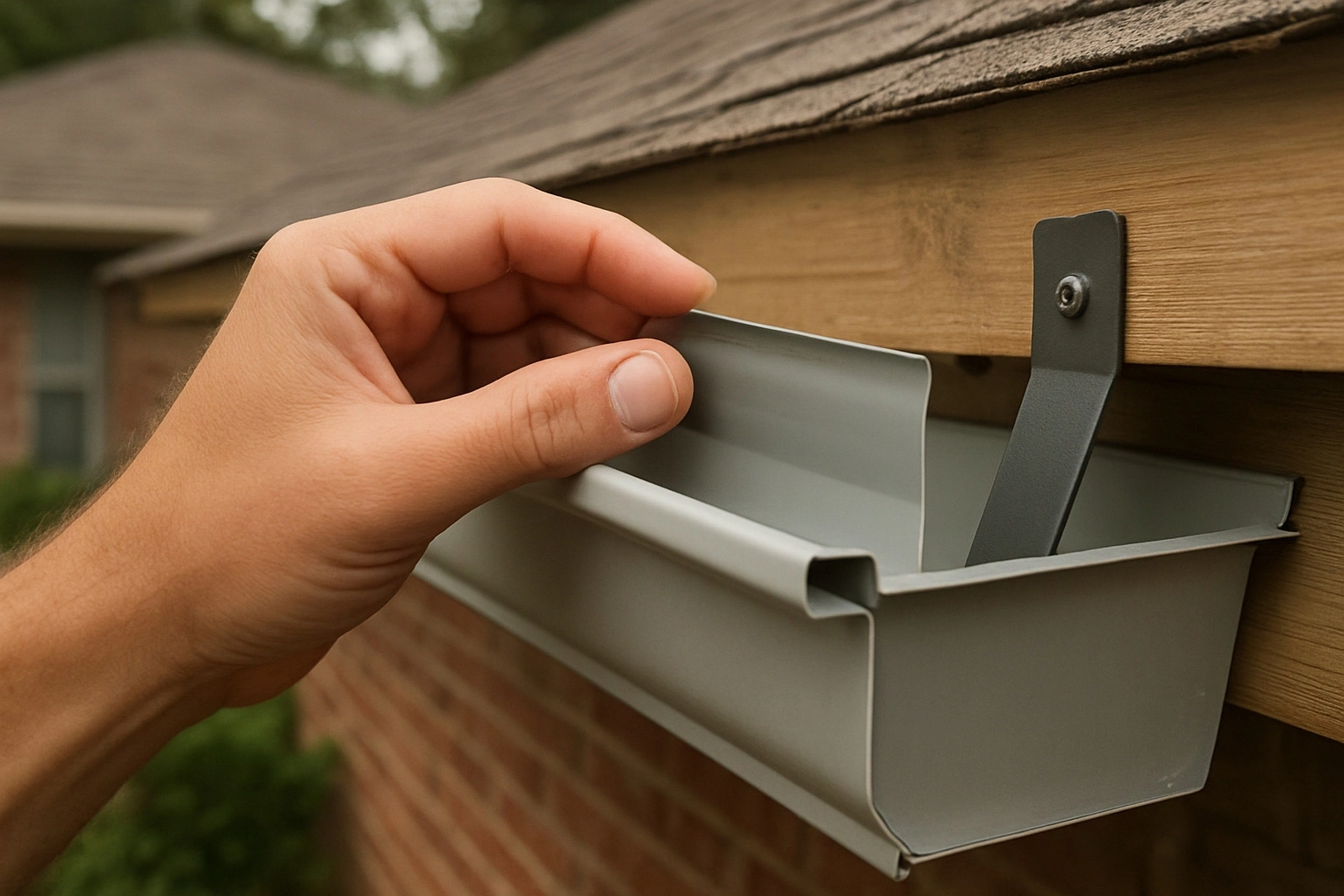
A gutter can overflow if water reaches it faster than it can drain. We check outlet placement and downspout capacity along with gutter size. We also look at where the water leaves the downspout, so it can drain away from the home.
Signs your gutter drainage needs attention
Gutter overflow during rain can point to a drainage problem. We check for clogs, damage, and parts that may not carry the roof runoff well.
Standing water after rain can signal a sag or a blocked outlet. Water collecting near the foundation can also mean the discharge path needs attention. You can watch for these signs from the ground and tell us what you've seen.
Contact AGM Gutters for an estimate of your gutter drainage needs. We'll look at the roof and drainage path and explain the work in our quote.
Get a Free EstimateWhat Are the Key Specifications to Know?
- Topic Focus
- Gutter Sizing, Slope, and Drainage: What Goes Into the Design
- Related Core Service
- Seamless Gutter Installation
- Evaluation Method
- On-Site Inspection & Written Scope
- Compliance Standard
- Local Building Code & Manufacturer Specs
How Does the Evaluation & Execution Process Compare?
| Evaluation Stage | Technical & Quality Criteria | Timeline Checkpoint |
|---|---|---|
| Initial Diagnostic & Assessment | Identify root cause, site constraints & code requirements | Before any work begins |
| Written Scope & Option Comparison | Compare repair vs. replacement tiers & material grades | Prior to project approval |
| Code-Compliant Execution | Follow manufacturer specs & local permitting standards | During active service |
| Final Verification & Walkthrough | Verify installation alignment, performance & clean site handoff | Upon project completion |