Signs of a Clogged Downspout
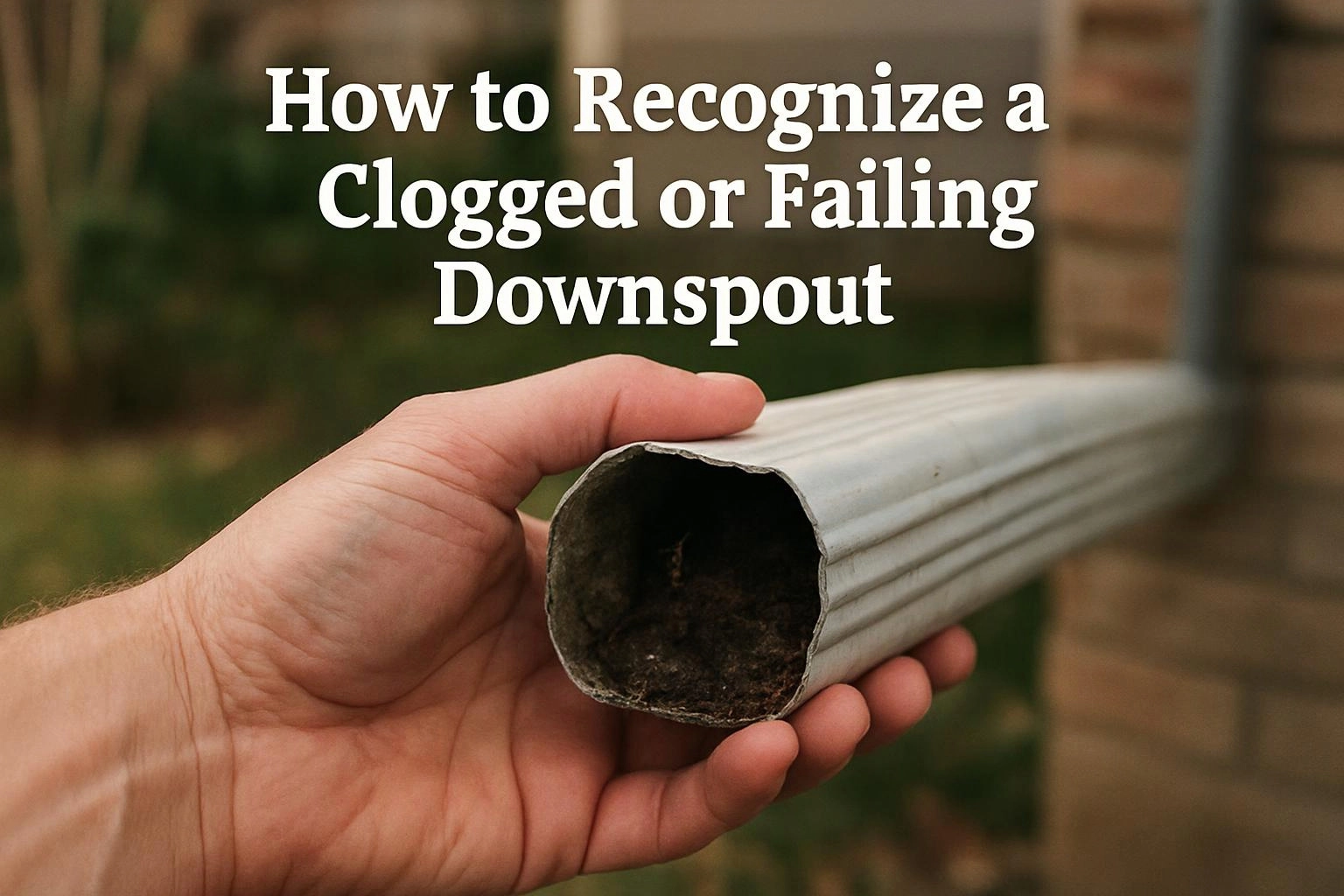
A clogged downspout can cause overflow, weak flow and leaks. You can look for these signs from the ground during rain.
- Gutter overflow: Water spills over the gutter edge.
- Weak water flow: Little or no water comes out of the downspout outlet.
- Water backing up: Water collects in the gutter instead of draining.
- Water leaks from a downspout joint.
- Leaves or other debris are visible at the outlet.
- Water pools near the downspout.
These signs don't always mean there's a clog. We check the flow and visible parts to find the cause.
Why Is Little or No Water Coming Out?
Little or no water at the downspout outlet can mean a clog, but light rain can also explain weak flow. Check for gutter overflow or water backing up before you decide.
A blockage can form at the gutter outlet or a bend in the downspout. A hidden drain blockage can also slow water leaving the system. During steady rain, you can watch the flow from the ground without climbing.
Common Causes of Downspout Clogs
Leaves, grit and nesting material can block a downspout. We look for debris where water enters and where the pipe bends.
- Leaves and twigs can collect inside the gutter system.
- Roof grit and sediment can build up in the pipe.
- Nesting material can block the path of water.
- Debris can catch at the gutter outlet or a downspout elbow, the bent section of pipe.
Why Is Water Pooling Near the Downspout?
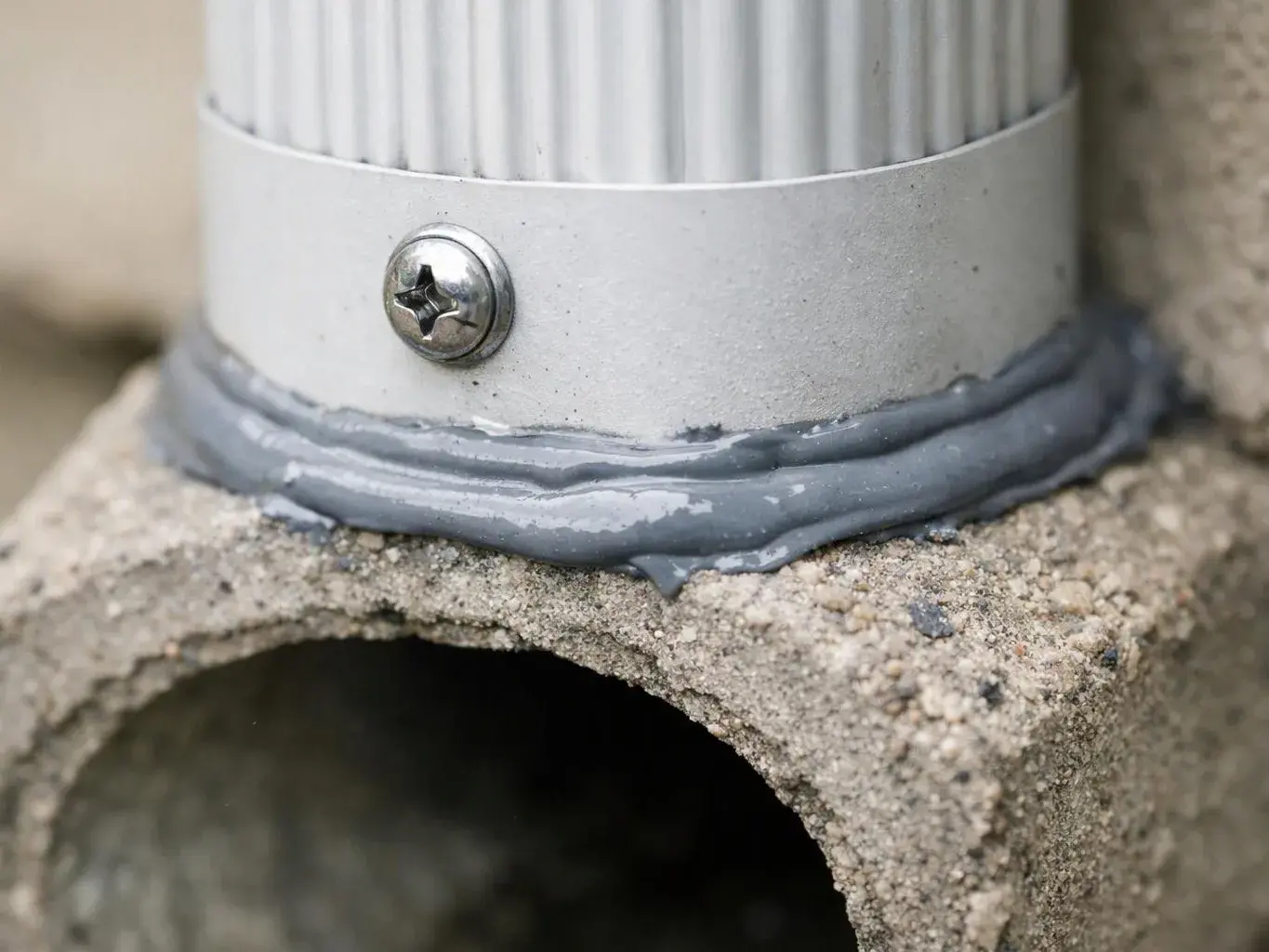
Water can pool near a downspout when a joint leaks or the outlet can't carry water away. A blocked drain or poor ground slope can also cause pooling.
A loose connection may let water escape beside the wall. A short or missing downspout extension can leave water too close to the home. We check the outlet, connections and drainage path to find where water is going.
An underground drain may be blocked even when the visible pipe looks clear. We check for signs of a backup before choosing the next step.
How Can You Tell a Clog From Downspout Damage?
A clog often backs water up, while damage may show as cracks, dents or loose joints. Both can cause leaks, and a downspout can have both problems.
From the ground, look for holes, a leaking joint or a loose bracket. A bracket holds the downspout against the wall. We check for detached brackets and watch where water escapes.
Overflow with water backed up in the gutter points toward a possible clog. A dent or crack points toward damage, but it doesn't rule out debris inside. We check both flow and visible parts before deciding what work is needed.
Ways to Help Prevent Downspout Problems
Clear gutters and sound downspout parts help water drain away. You can watch for changes from the ground and ask us to handle work that needs a ladder.
- Keep gutters clear of leaves and debris.
- Watch outlet flow from the ground during rain.
- Keep the outlet and extension clear.
- Check visible joints and brackets for damage.
When Does a Downspout Need Repair or Replacement?
A downspout may need repair when a joint leaks or a bracket comes loose. Badly damaged sections may need replacement, while a debris clog may call for cleaning.
We check the flow and visible damage before choosing the work. Gutter cleaning can address a debris blockage without replacing sound parts. We can repair a damaged joint or loose bracket, or replace a badly damaged section.
Our Downspout Repair work addresses damaged parts that stop water from draining as it should. If climbing feels unsafe, call AGM Gutters. Our crew handles the ladder work.
Request a QuoteWhat Are the Key Specifications to Know?
- Topic Focus
- How to Tell When a Downspout Is Clogged or Damaged
- Related Core Service
- Downspout Repair
- Evaluation Method
- On-Site Inspection & Written Scope
- Compliance Standard
- Local Building Code & Manufacturer Specs
How Does the Evaluation & Execution Process Compare?
| Evaluation Stage | Technical & Quality Criteria | Timeline Checkpoint |
|---|---|---|
| Initial Diagnostic & Assessment | Identify root cause, site constraints & code requirements | Before any work begins |
| Written Scope & Option Comparison | Compare repair vs. replacement tiers & material grades | Prior to project approval |
| Code-Compliant Execution | Follow manufacturer specs & local permitting standards | During active service |
| Final Verification & Walkthrough | Verify installation alignment, performance & clean site handoff | Upon project completion |