Why Gutters Leak at Seams, Corners, and Downspout Connections
Gutter leaks at seams, corners, and downspout connections usually result from failed sealant, separated joints, movement, clogs, or poor drainage; AGM Gutters can inspect the leak and handle gutter repair, replacement, or seamless installation.
3 years of local experience
Get a Free Estimate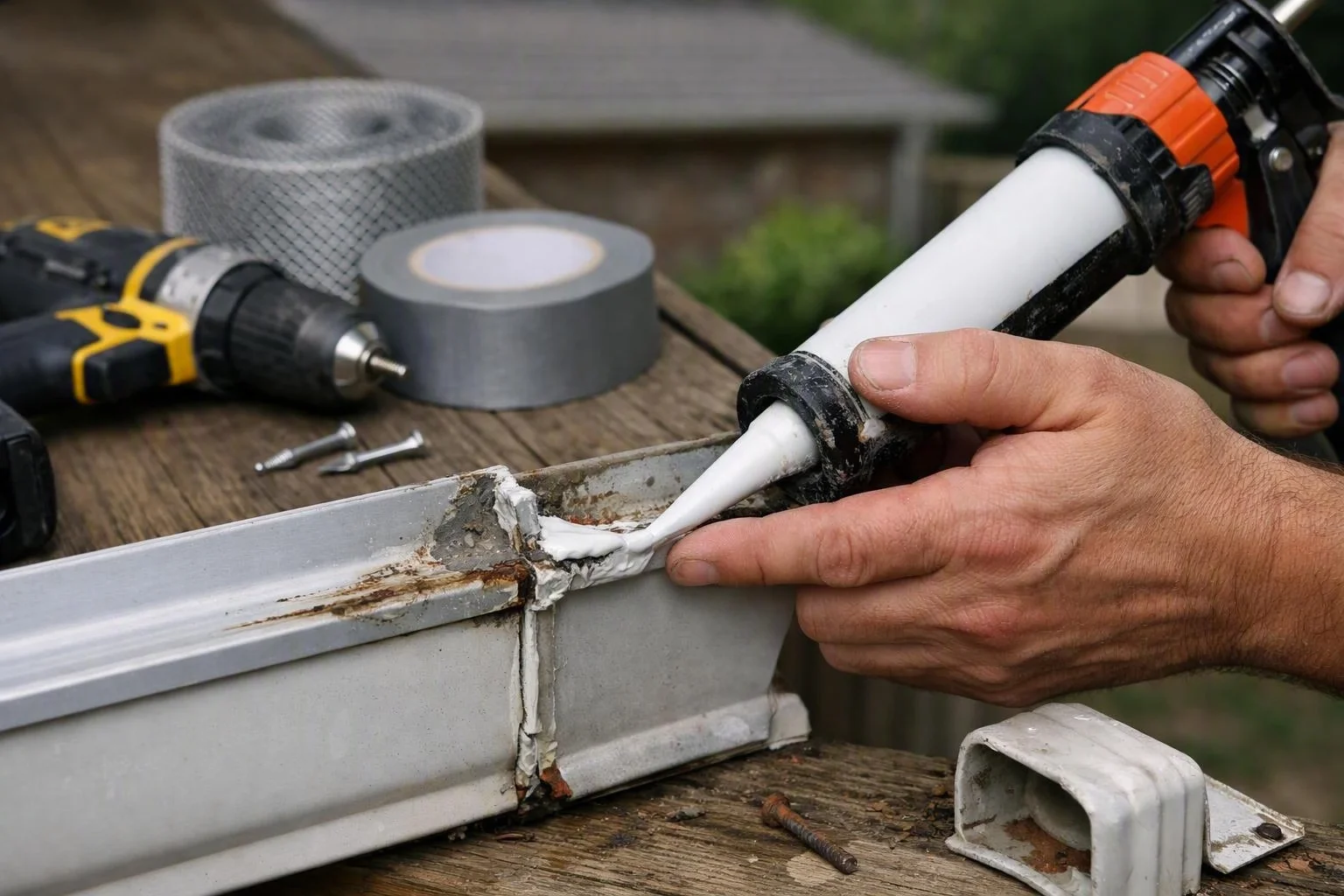
Why Do Gutters Leak at Seams, Corners, and Downspout Connections?
Gutter leaks at joints happen when sealant fails, sections separate, fasteners loosen, or water backs up against the connection. AGM Gutters checks the joint, the nearby gutter, and the roof drainage path to locate the source.
A gutter seam joins two sections of a rain gutter. A gutter corner changes the direction of water flow, while a downspout connection moves roof runoff into the vertical drainage system. Each point can leak when joint movement, debris buildup, or poor alignment puts stress on the connection.
What Signs Show That a Gutter Joint Is Leaking?
A leaking gutter joint often leaves water marks or wet areas near the connection. Our team looks at the visible symptom and traces the water back to the failed part.
These signs can also point to overflow or a clogged downspout. We inspect the full drainage flow before choosing a repair.
What Common Causes Make Gutter Seams and Connections Leak?
Gutter seams and connections leak when joint materials, support parts, or water flow no longer work together. AGM Gutters checks each cause before we reseal or replace a connection.
Small joint damage can grow when water keeps pushing against the same area. We correct the source of the stress when the gutter alignment or drainage flow is part of the problem.
How Do Seam, Corner, and Downspout Leaks Differ?
Gutter seam leaks occur between gutter sections, corner leaks occur where gutter runs change direction, and downspout leaks occur where concentrated water enters or leaves the gutter.
An inside corner can collect debris and place extra pressure on the joint. An outside corner may open when the gutter shifts. A downspout elbow can leak when it separates, while a downspout outlet leak can come from a damaged opening or poor connection.
An end cap leak appears at the closed end of a gutter run. We inspect the end cap, hanger, fastener, and fascia when water appears at the end of the system.
How Can You Stop a Gutter From Leaking at a Joint?
Stopping a gutter joint leak requires cleaning the area, identifying movement or damage, and resealing or replacing the affected connection when the joint cannot hold a repair. We keep the work focused on the actual leak source.
Gutter cleaning removes debris that can hide a crack or hold water against the joint. During a joint inspection, our crew checks the gutter sealant, replacement fastener needs, gutter alignment, and downspout connection.
Clean, sound joints may need fresh gutter sealant. Separated or damaged joints may need a new fastener, a replacement section, or a corrected connection so the repair does not fail again.
Should You Repair or Replace Leaking Gutters?
Gutter repair fits a localized joint problem, while gutter replacement or seamless gutter installation fits widespread damage, recurring failures, or gutters that no longer hold their shape. We base the decision on the condition of the gutter and its supporting parts.
| Option | Best when | Focus |
|---|---|---|
| Gutter repair | The leak is localized and the gutter remains aligned, supported, and structurally sound. | Repair the seam, corner, end cap, fastener, or downspout connection causing the leak. |
| Gutter replacement | The gutter has extensive corrosion, deformation, separation, or repeated failures. | Replace damaged sections or the affected gutter system. |
| Seamless gutter installation | Multiple sectional joints contribute to recurring leaks or a new continuous system is appropriate. | Install continuous gutter runs with fewer field seams. |
Corrosion, structural damage, or repeated leaks can make a small patch unreliable. We explain whether localized damage can be corrected or whether a new drainage system gives the better result.
How Can You Prevent Leaks at Gutter Joints?
Regular gutter maintenance helps prevent leaks by keeping water moving and catching joint problems early. Our team can check the parts that control drainage flow and gutter support.
Prevention works best when the gutter alignment and support remain stable. We address movement and drainage problems before they place more stress on the joints.
How AGM Gutters Checks and Resolves a Leaking Gutter
AGM Gutters checks the leak source, evaluates the gutter and supporting components, and explains whether gutter repair, gutter replacement, or seamless gutter installation addresses the problem; we provide Free Estimates Available.
We inspect the seam, corner, end cap, downspout outlet, downspout elbow, fascia, hangers, and fasteners around the leak. We also check for gutter clog, poor gutter slope, standing water, overflow, and signs of water damage.
Our recommendation matches the condition of the drainage system. We complete a focused gutter repair when the damage is localized, replace damaged parts when needed, and plan a continuous gutter run when repeated sectional joints cause recurring leaks.
To discuss a leaking gutter, contact AGM Gutters through Gutter Repair information and request an estimate for the work your system needs.
Questions About Leaking Gutter Joints
Do seamless gutters prevent leaks?
Yes, seamless gutters can reduce leaks because continuous gutter runs have fewer field seams. AGM Gutters still checks corners, end caps, fasteners, slope, and downspout connections because those parts can leak in any gutter system.
Can a leaking gutter damage the fascia?
Yes, a leaking gutter can wet the fascia and nearby building materials. We inspect the fascia, gutter fasteners, hangers, and alignment when water has been reaching the area.
Why does water come out of the bottom of my downspout connection?
Water comes out of the bottom of a downspout connection when the outlet, elbow, or joint is separated, damaged, or blocked. We inspect the connection and clear the drainage path before repairing or replacing the affected part.