How Often Should Gutters Be Cleaned After Installation?
Gutter cleaning after installation should follow debris buildup, surrounding vegetation, weather exposure, and visible water-flow changes; AGM Gutters checks these conditions and cleans gutters when needed.
3 years of local experience
Get a Free EstimateHow Often Should Gutters Be Cleaned After Installation?
Gutter cleaning after installation should be scheduled when debris begins to restrict flow, with the schedule adjusted for trees, roof debris, weather, and the gutter system's condition.
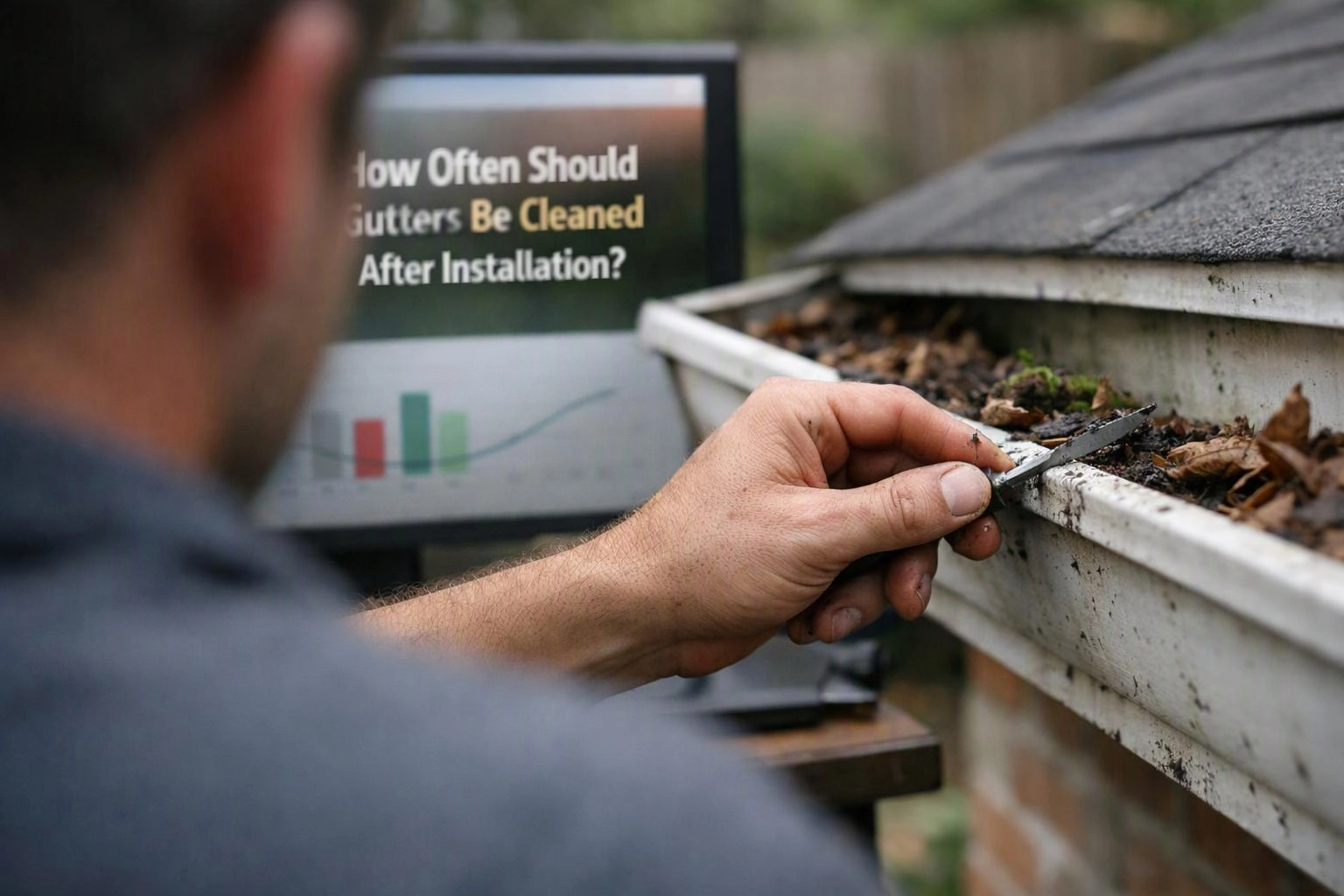
Newly installed gutters can collect leaves, twigs, sediment, and roof debris soon after the work is complete. We check the gutter channels and downspouts so rainwater flow stays clear and water drainage moves away from the home.
A fixed calendar schedule may not fit every roofline. We look for leaf buildup, blocked outlets, and changes in roof runoff before recommending the next cleaning.
What Changes a Gutter Cleaning Schedule?
Tree cover is one of the main factors that changes a gutter maintenance schedule. Deciduous trees can add leaves and twigs, while evergreen trees can shed needles throughout the year.
Roof debris can move into the gutters after wind, rainfall, or roof work. We check the roofline and gutter channels after heavy weather so small debris does not become a downspout blockage.
Wind exposure and roof pitch also affect how much material reaches the gutters. Steeper roofs may send more roof runoff into the channels during rain.
Gutter guards can reduce larger debris, but guards still need attention. Our team checks the guard surface, edges, and downspouts to confirm that water flow remains open.
What Should You Check After New Gutters Are Installed?
Gutter installation checks confirm that the complete system moves water as planned. We review each part after installation and look for signs that could affect water drainage.
The table below shows the main post-installation points we review.
| Part to check | What to look for | Why it matters |
|---|---|---|
| Downspouts | Open outlets and clear discharge paths | Supports steady water drainage |
| End caps | Secure edges with no visible leaks | Keeps water inside the gutter channels |
| Gutter slope | A smooth path toward the outlets | Helps rainwater flow to the downspouts |
| Seams | Tight joints without gaps or seepage | Limits leaks along the roofline |
What Should You Do During the Gutter Maintenance Timeline?
Gutter maintenance follows the condition of the system after installation. We use each stage to check performance, remove debris, and protect water flow.
Homeowners can watch for visible changes between visits. Ladder work can be unsafe, so AGM Gutters handles inspection and cleaning when the roofline is difficult to reach.
| Time period | Required actions |
|---|---|
| Immediate | Review gutter slope, fasteners, seams, end caps, and downspout connections after installation. |
| First Week | Observe water flow during rain and check for leaks, pooling, or gutter overflow. |
| First Month | Schedule a gutter inspection if leaves, twigs, roof debris, or sediment begin to collect. |
| Ongoing | Clean gutters, flush downspouts, check fasteners, clean gutter guards, and review water flow when conditions change. |
Free Estimates Available when you contact our team for work that needs a closer review.
What Warning Signs Show a Gutter Problem After Installation?
Gutter overflow can show that debris, slope, or drainage is affecting the new system. We use visible warning signs to guide the next inspection and cleaning.
How AGM Gutters Handles Post-Installation Gutter Cleaning
AGM Gutters handles post-installation gutter cleaning by reviewing the full system, removing debris, and checking how water leaves the roofline. We connect the cleaning work to the condition of the gutter installation.
Our team begins with a gutter inspection. We look for leaf buildup, roof debris, loose gutters, leaks, and signs of poor water drainage.
Our crew then clears the gutter channels and completes downspout cleaning when debris is restricting flow. We also check gutter guards, seams, hangers, and fasteners where those parts affect performance.
Gutter cleaning is only one part of home exterior maintenance. If the system still overflows after debris removal, we review the gutter slope, outlets, and roof runoff to identify the next step.
Contact AGM Gutters to discuss a gutter inspection, gutter cleaning service, or gutter installation review.
AGM Gutters provides Free Estimates Available for work that needs an exact review of the property and gutter system.
Questions About Cleaning Gutters After Installation
Do new gutters need to be cleaned?
Yes, new gutters need to be cleaned when leaves, twigs, roof debris, or sediment begin to restrict water flow. AGM Gutters checks newly installed gutters and cleans them when buildup affects performance.
Can gutter guards eliminate gutter cleaning?
No, gutter guards cannot eliminate all gutter cleaning. Gutter guards can limit larger debris, but leaves, needles, roof grit, and sediment may still collect on the guards or near the downspout openings.
Should gutters be cleaned after a storm?
Yes, gutters should be checked after a storm when wind or rainfall may have added roof debris or shifted material into the downspouts. We inspect for blockage, leaks, overflow, and changes in water drainage.
When should a downspout be cleaned after gutter installation?
A downspout should be cleaned when water drains slowly, backs up, or spills from the gutter during rainfall. We flush the downspout and check the outlet when a blockage may be affecting the gutter system.