
What Is Flashing?
Flashing is thin, shaped material installed at roof edges, wall joints, and other openings to guide water away from vulnerable connections. In gutter systems, flashing helps direct roof runoff into the gutter and protects the fascia, soffit, siding, and roof structure from water intrusion. Common materials include aluminum, steel, and galvanized metal.
Quick Facts About Flashing
Category
Water-management component
Used for
Redirecting runoff at roof and wall joints
Common confusion
Often mistaken for sealant or gutter hardware
Also called
Roof Flashing, Drip edge
Often discussed with
Gutter Repair, Fascia Repair
Key Takeaways About Flashing
- Flashing forms a water-shedding barrier at vulnerable joints.
- Gutter flashing helps guide roof runoff into the gutter channel.
- Flashing is not the same as a gutter hanger or sealant.
How Flashing Works

Flashing works as a shaped barrier that changes the path of water. Installed beneath or behind adjoining materials, flashing carries runoff over a joint and toward a drainage channel. The shape, overlap, and position must match the roof edge, wall surface, or gutter connection.
Related glossary terms: Apron Flashing, Fascia Board, Water Damage.
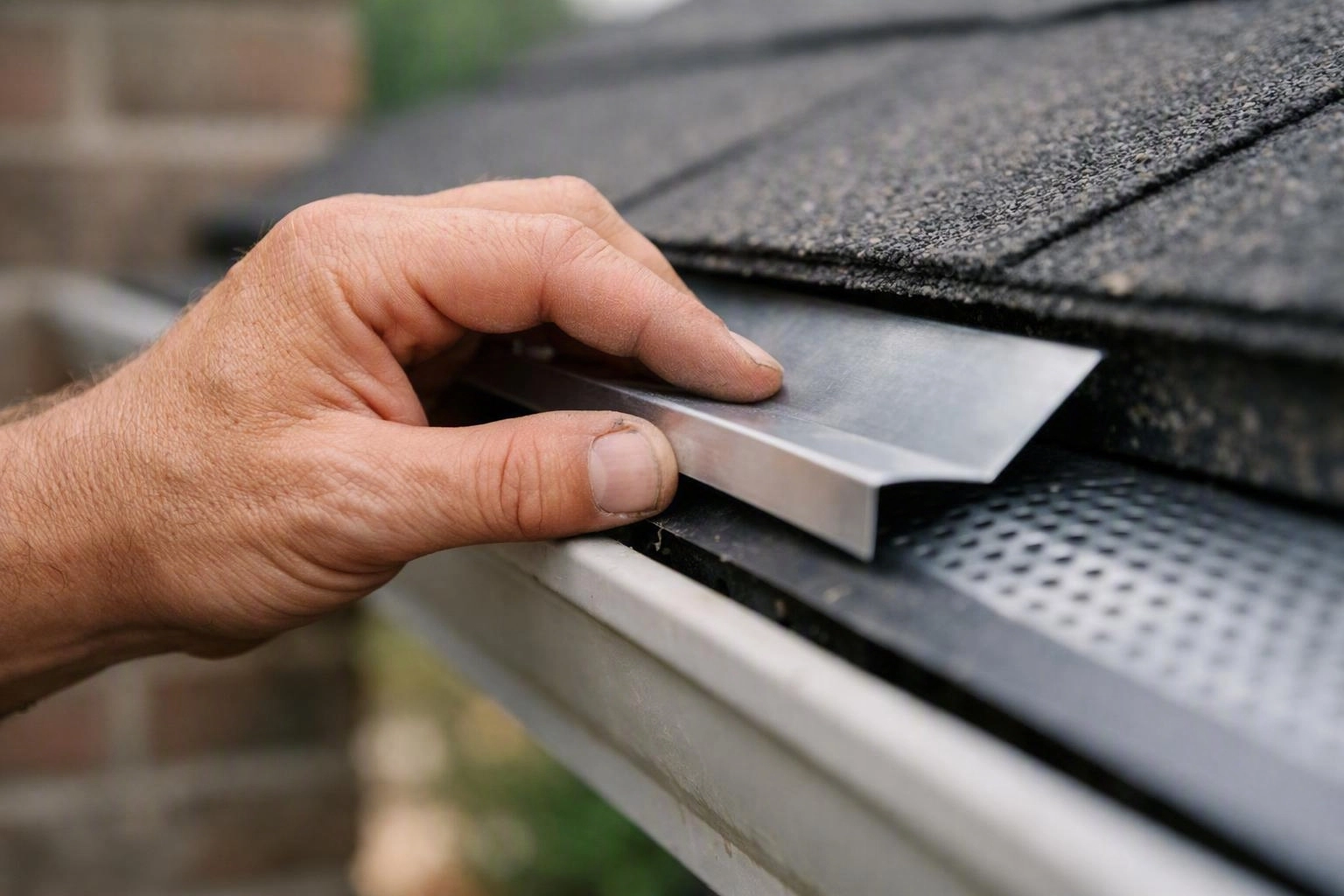
At a gutter edge, flashing may sit behind the back of the gutter and beneath the roofing edge. This arrangement helps prevent water from reaching the fascia board when runoff follows the roof surface. Flashing may also cover a gap near a roof-to-wall connection, where wind-driven rain can enter. Sealants can support a flashing detail, but sealant does not replace the metal or membrane that directs water.
From the AGM Gutters team
When we inspect flashing during Gutter Repair, we check how the material meets the roof edge, wall, and gutter. We look for lifted sections, open joints, corrosion, and paths that let water reach the fascia. Our team also checks whether the gutter sits in the correct position to receive runoff from the flashing.
Flashing in Practice: A Real-World Example
A roof edge may send water behind a gutter when the flashing is bent or separated. A repair can restore the flashing position and seal the affected joint so runoff reaches the gutter channel.
Related Services
Related Terms
Apron Flashing
Apron Flashing is a sheet-metal component installed along a roof edge to guide water into the…
Fascia Board
Fascia Board is a horizontal board fixed along the lower edge of a roof. It supports…
Water Damage
Water Damage is harm caused when unwanted moisture enters or remains in building materials. The moisture…
AGM Gutters
Have Questions About Flashing?
Contact AGM Gutters for practical guidance on Flashing and related gutter installation work in Arkansas.