
What Is Water Damage?
Water Damage is harm caused when unwanted moisture enters or remains in building materials. The moisture can weaken siding, stain surfaces, swell wood, loosen finishes, and support decay. The severity depends on where water travels, how long materials stay wet, and whether the source continues. Repairs address both damaged materials and the path of entry.
Quick Facts About Water Damage
Category
Building moisture problem
Used for
Describing moisture-related material damage
Common confusion
Mistaken for ordinary siding wear
Also called
Moisture Damage
Often discussed with
Siding Repair, Downspout Repair
Key Takeaways About Water Damage
- Moisture can travel behind siding before visible damage appears.
- Repair must address the damaged surface and the water source.
- Water damage is not the same as normal weathering or fading.
How Water Damage Works
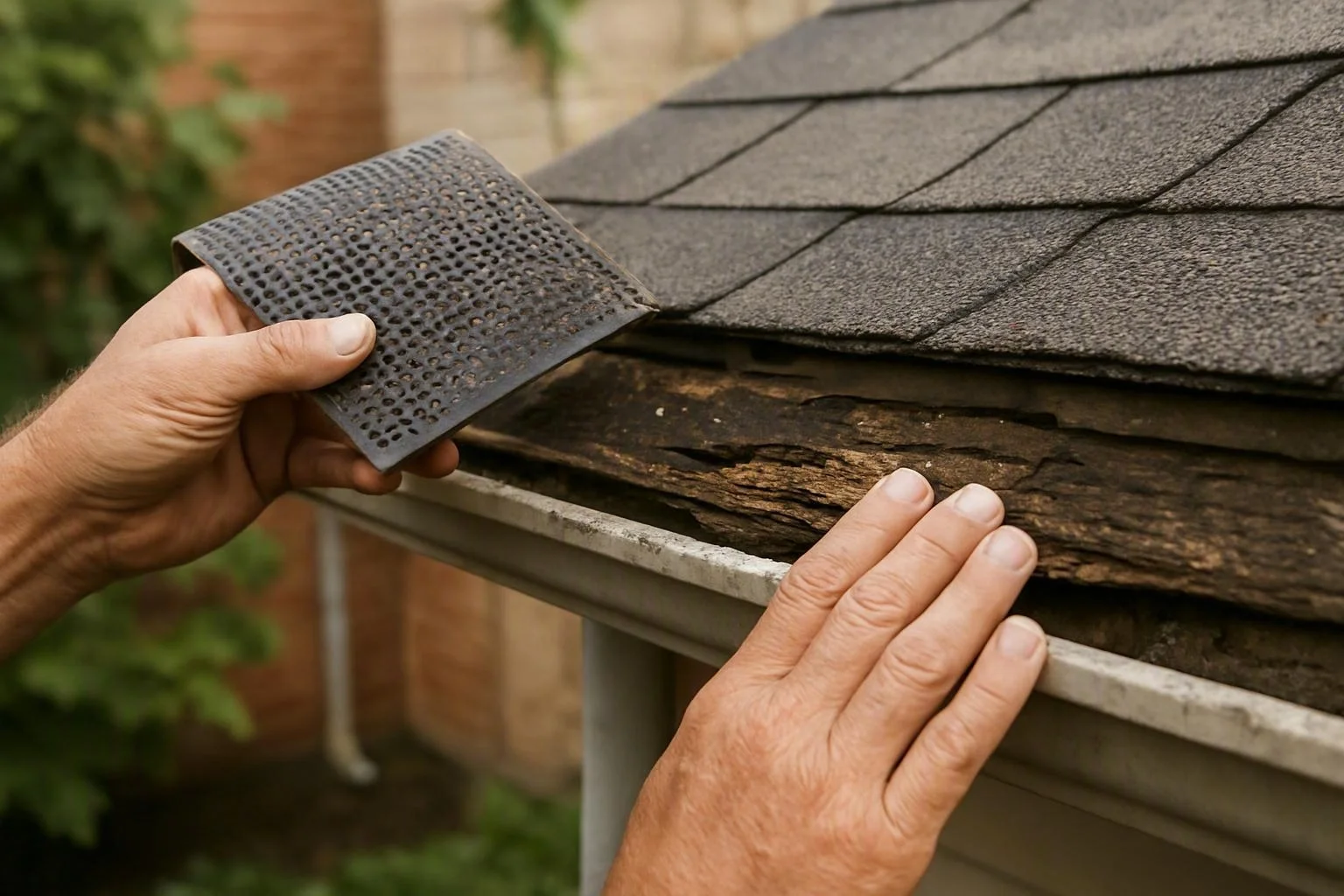
Water Damage develops as moisture reaches areas that should remain dry. Water may enter through cracked siding, open joints, failed flashing, or runoff that reaches the wall. Porous materials absorb moisture, while enclosed spaces can hold it behind the visible surface. The outside appearance may change before the full affected area can be seen.
Related glossary terms: Flashing, Downspout, Runoff.
During siding repair, the condition is checked by tracing stains, soft spots, swelling, gaps, and changes around wall openings. Flashing helps direct water away from seams and transitions, while a downspout controls runoff near the foundation and wall. Repair work may include removing damaged siding, correcting the entry path, and replacing affected sections. A sound repair matches the source of moisture with the location of the damage.
From the AGM Gutters team
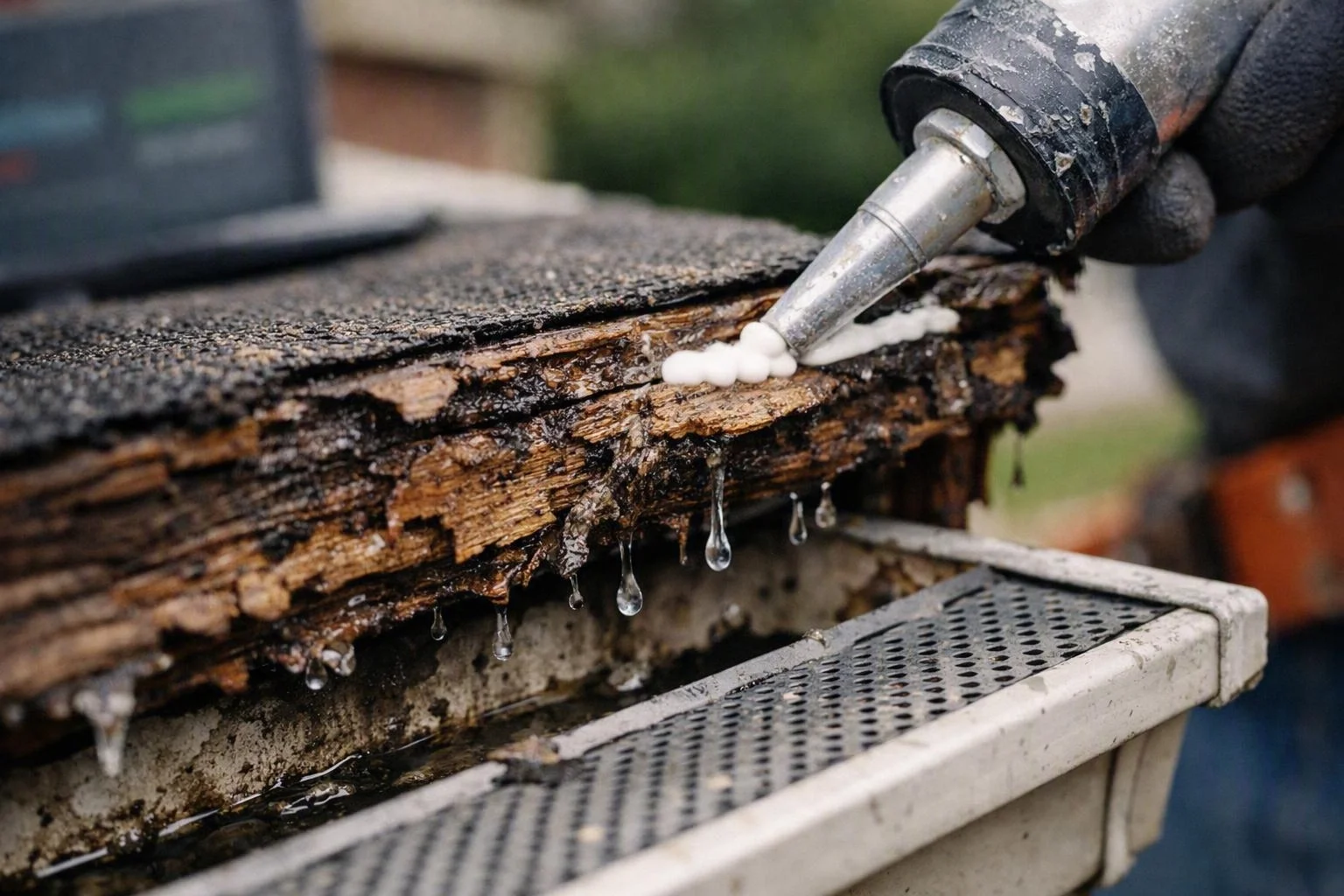
When we inspect water damage during siding repair, we look beyond the visible surface. We check nearby joints, trim, flashing, and drainage paths for signs that moisture is entering or moving behind the siding. We address the water path before treating the damaged area.
Water Damage in Practice: A Real-World Example
A section of siding below a roof edge may swell after runoff reaches an open joint. Siding repair can involve removing the affected section, correcting the joint, and checking the nearby drainage path.
Related Services
Related Terms
Flashing
Flashing is thin, shaped material installed at roof edges, wall joints, and other openings to guide…
Downspout
A downspout is a vertical drainage component that carries water from a roof gutter to the…
Runoff
Runoff is water that flows across a roof or other surface after rain or melting precipitation…
AGM Gutters
Have Questions About Water Damage?
Contact AGM Gutters for practical guidance on Water Damage and related gutter installation work in Arkansas.